


Two days before SEPTA’s board convened for its September 24th regular meeting, General Manager Scott Sauer unveiled Accelerate, the authority’s vision for what better transit could look like in the Philadelphia region.
“[Accelerate] is our bold vision of the future, but one that is very much attainable, if we make a decision to invest in public transportation,” General Manager Scott Sauer told the board, adding that he wants SEPTA to “be the vehicle for [Philadelphia’s] growth for future generations.”
Board Chair Ken Lawrence framed the initiative as SEPTA proving it’s a “worthy investment partner” — language aimed squarely at a Harrisburg legislature that has spent two straight budget cycles failing to deliver the dedicated funding SEPTA has been asking for since the last crisis moment in 2024.
The plan packages together existing commitments like the new L cars, trolley modernization, and other capital programs part of the SEPTA Forward agenda, but adds the long-awaited Reimagining Regional Rail final report, which envisions the path to frequent, all-day rail service throughout the region. The changes altogether would more than double transit access across the region. BPN will have more analysis of the RRR report in future posts.
Governor Shapiro’s proposal to redirect $319 million in sales tax revenue to transit has repeatedly cleared the House and repeatedly died in the Republican-controlled Senate, where some members argue SEPTA hasn’t proven it can manage the money it already has. SEPTA’s current capital funding runs out July 1, 2027.
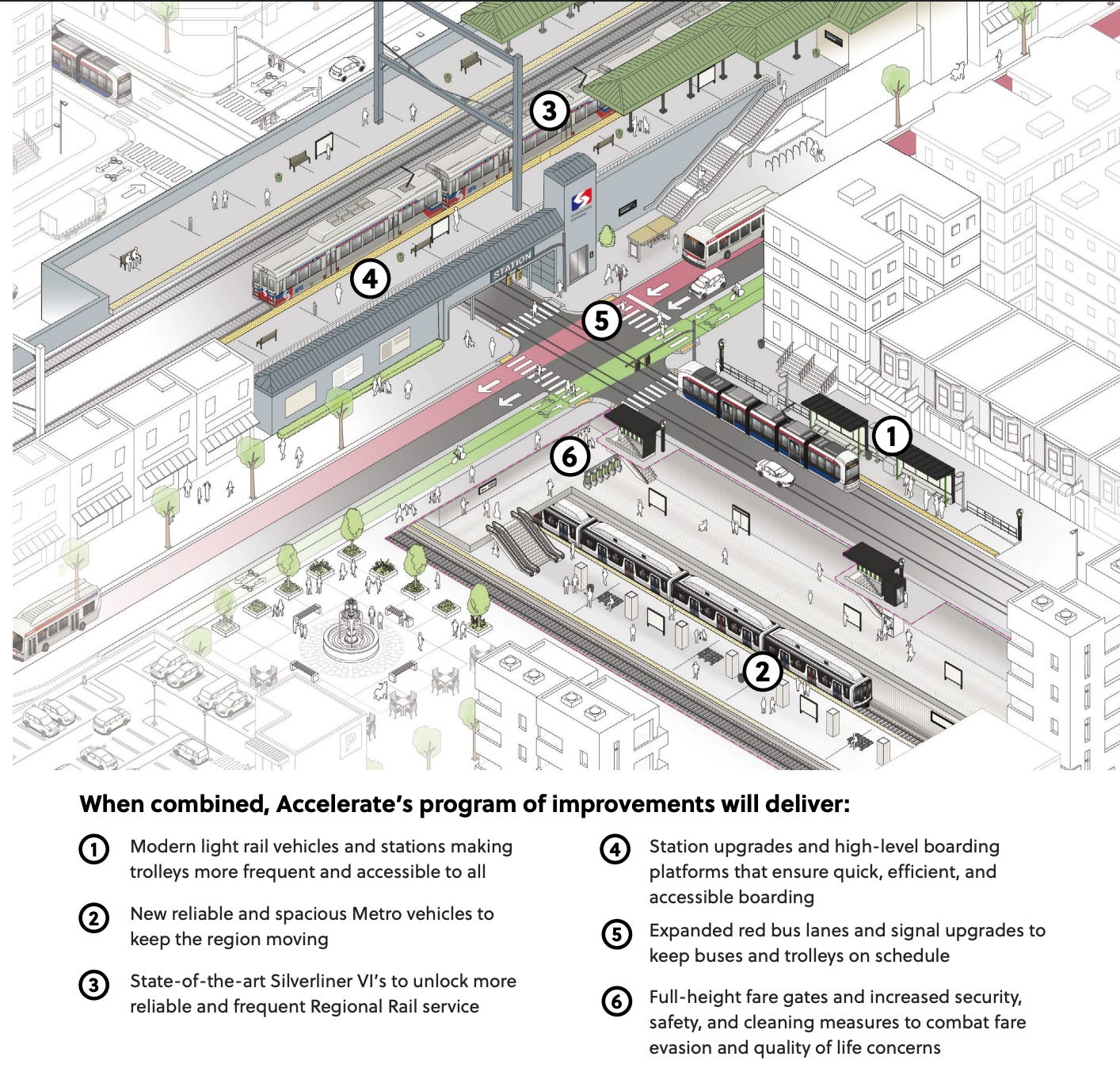
Photo: Accelerate: SEPTA’s Best-in-Class Vision for a Greater Philadelphia Region. Accelerate – Southeastern Pennsylvania Transportation Authority.
The gap between the resources required for Accelerate and SEPTA’s actual financial position was on display at this month’s board meeting.
The FY2027 budget SEPTA is now operating under includes a structural deficit of $192 million, down from $213 million owing to budget cuts and non-fare revenue gains, that’s still unresolved, and substantially hangs on the results of PA’s state Senate elections. In the August financial report the board reviewed the same day, SEPTA’s deficit before subsidies ran $230.4 million for the first two months of the fiscal year, essentially on budget.
Recent wins
Sauer touted some of the authority’s recent progress as proof SEPTA got the message from the legislature.
Ridership is still picking up, with systemwide ridership gains of 5% compared to August 2025. Moody’s also revised the authority’s credit outlook from negative to stable this cycle. Summer operating costs tied to major events were fully reimbursed by government partners, but rising fuel prices are starting to bite, making it harder to close the looming budget gap on SEPTA’s end.
Transit Police reported crime is down 37%, and the authority found $30 million in annual savings from cost-savings and austerity measures. New Bus Network routes that have been extended or adjusted since the redesign have posted ridership gains of at least 10%. For the Eagles’ home opener, SEPTA carried almost 22,000 fans to and from Lincoln Financial Field, up nearly 6,000 from the year before. Sauer also cited construction at 11th Street Station, targeted to reopen in 2027, and two new federal grants supporting station accessibility work and the replacement of Regional Rail cars.
These are strong numbers for an agency two years removed from proposing 45% service cuts.
Beyond the three items below, the board also ratified a new labor contract with Transport Workers Union Local 234 covering bus operators on the Trenton-Philadelphia Coach Division, added $636,863 to an already-$15.8 million design contract for the T5 trolley line as Trolley Modernization keeps moving. They also authorized $55.9 million to rebuild seven bridges on the Chestnut Hill West Regional Rail line.
Shawmont Station transit museum
The board approved a 20-year lease (with a five-year renewal option) of the historic Shawmont Station building, at 7700 Nixon Street along the Manayunk-Norristown Regional Rail line, for $1 a year. The city will in turn sublease the 1826 Greek Revival station — vacant since SEPTA commuter operations there ceased in 1991 — to the Historic Shawmont Station Society, a nonprofit that will restore it into a museum and community learning center near the entrance to the Schuylkill River Trail.
The resolution puts the deferred capital repair bill at somewhere around $1 million and all of it now falls to the city, and eventually the nonprofit.
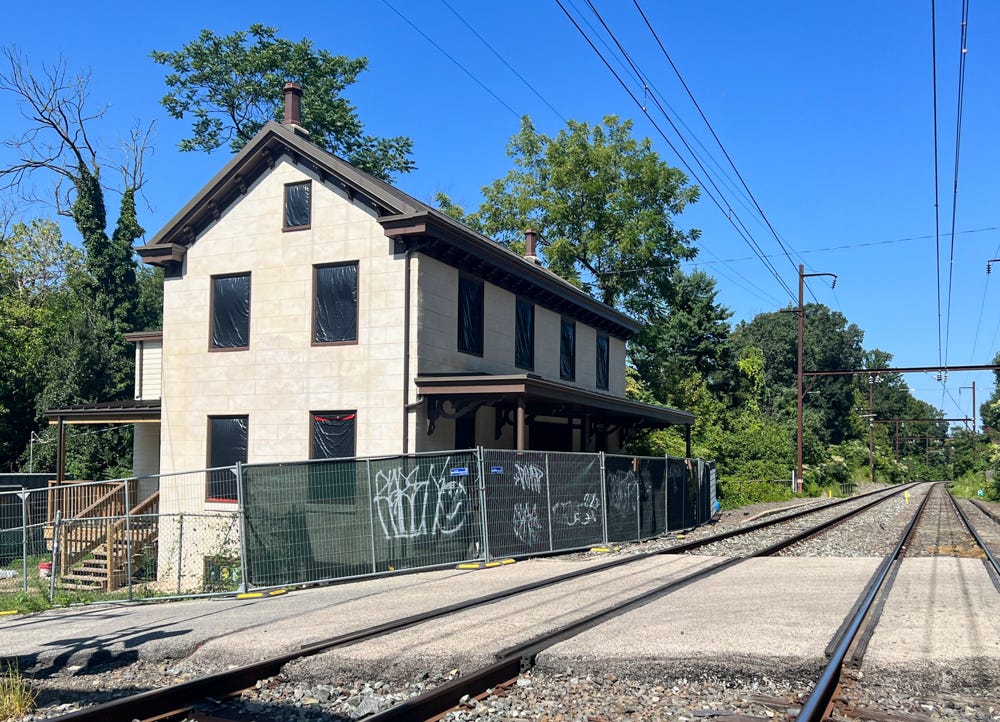
Photo: Restoration of historic shawmont station in Roxborough nearing completion. Hidden City Philadelphia.
Accessibility spending
Since the July meeting, SEPTA broke ground on rebuilding 11th Street Station, targeted to reopen in 2027, and received two federal grants — one for station accessibility work, another for replacing Regional Rail cars.
Accelerate promises 100% accessible stations, up from roughly 60% today. On September 24th, the board awarded just over $7.1 million split across three contractors — Torrado Construction, Hyde Electric, and Dolan Mechanical — to replace the eastbound and westbound elevators at Tioga and Girard stations on the Market-Frankford Line.
Changes to procurement voting
The board approved the first revision to its procurement thresholds since 2008. Non-A&E professional service contract amendments, which previously required a board vote at any dollar amount, that the CPO be authorized to approve amendments 10% of contract value or $250,000, and that the General Manager’s be authorized to approve up to 20% of contract value or $500,000, whichever threshold is reached first. Routine agreements with municipalities, public utilities, and other transit operators no longer need board approval below $250,000, up from $100,000. The Board also voted to increase the General Manager’s authority to approve and execute sales or leases of personal property and leases of property to the Commonwealth of Pennsylvania or the United States of America from $25,000 to $250,000. Inflation has eroded thresholds set almost 20 years ago, and the old numbers were slowing the agency down.
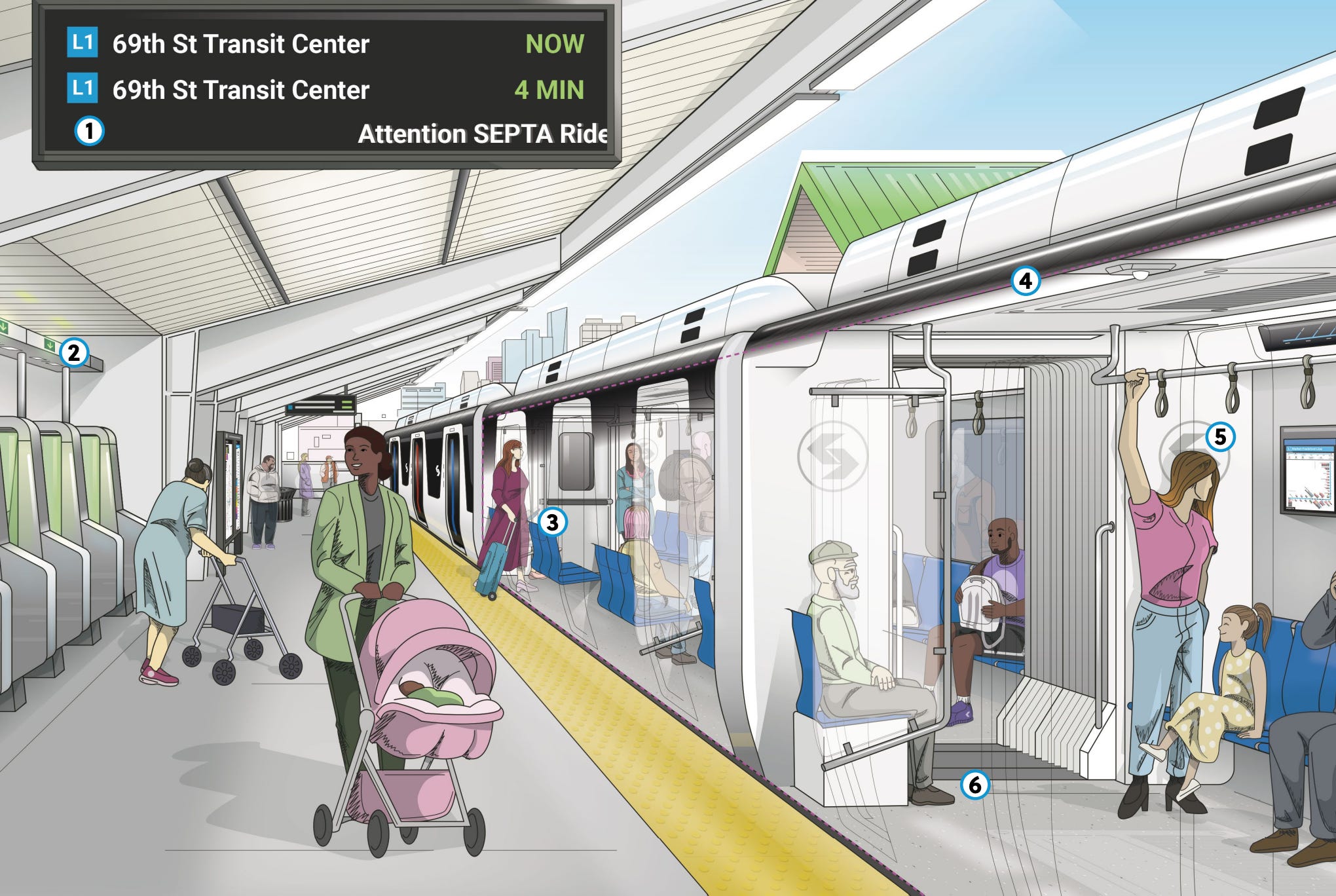
Photo: Accelerate: SEPTA’s Best-in-Class Vision for a Greater Philadelphia Region. Accelerate – Southeastern Pennsylvania Transportation Authority.