



This month’s Historical Commission meeting was a light one.
They approved a new building on the site of the Walnut Beer Garden, replacing three historic buildings destroyed by arson during the unrest of May 2020.
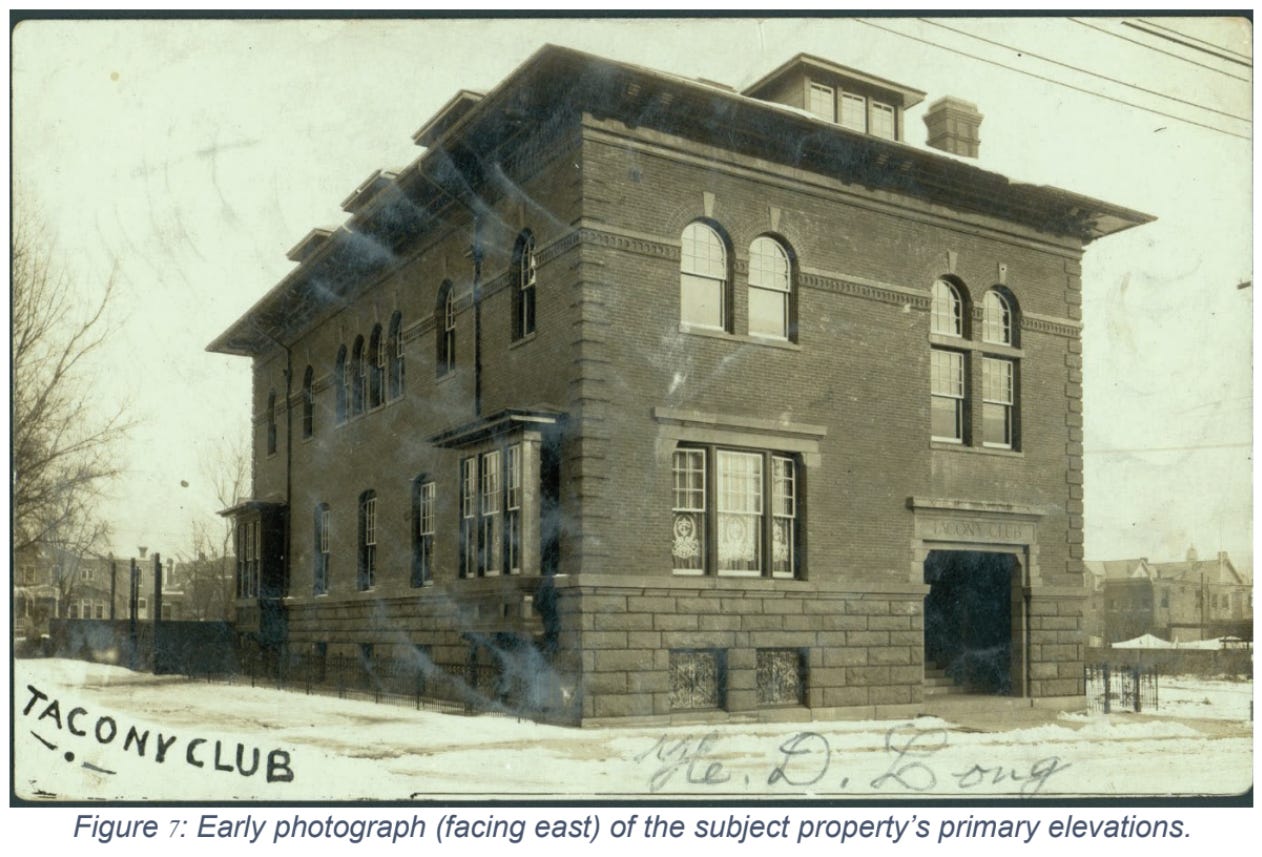
They approved an elevator addition and other exterior changes to the former Tacony Club, clearing the way for a mixed-use conversion with sixteen homes.
They approved stucco, brownstone, and window work at a Rittenhouse rowhome and alterations to two buildings on the College of Physicians campus.
The real action this month was at the committee level, with the Committee on Historic Designation reviewing the proposal to protect the “We the Youth” Keith Haring mural at 2147 Ellsworth Street. This would be the first outdoor mural added to the Philadelphia Historic Register, and one of only a few pieces of public art on the register.
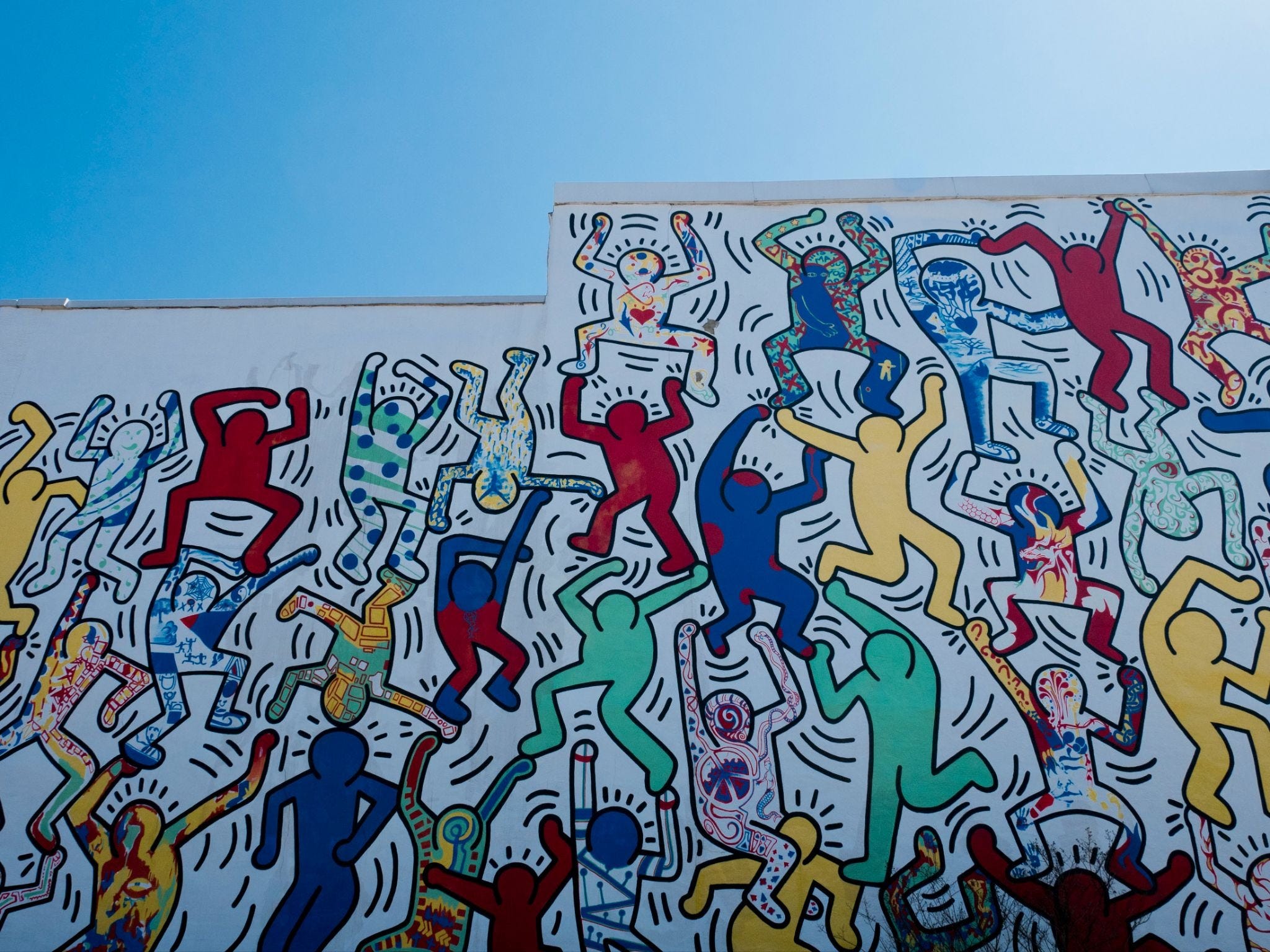
Courtesy of Molly Des Jardin (https://www.flickr.com/photos/mdesjardin/51099789417/in/photostream/)
The nomination has drawn wide public attention and raises some unusual questions. No one in this process has disputed the mural’s significance or argued that it shouldn’t be preserved if possible. The questions raised by this process are about the appropriateness of the Commission’s role in preserving it under the city’s preservation ordinance.
“We the Youth” is painted on a party wall in Point Breeze between 2149 Ellsworth Street and 2147 Ellsworth Street. 2149 is currently a community garden owned by the Neighborhood Gardens Trust, while 2147 is owned by an LLC managed by Ori Feibush. Feibush is the CEO of OCF Realty. Sean Whalen, an attorney representing the LLC, stated unambiguously that OCF Realty does not have an ownership interest in the property, correcting earlier PHC documents that named OCF as the owner. OCF’s role in the property, according to Whalen, is limited to being the property manager.
Since the mural is painted on the shared party wall, both properties would be covered by the designation. The Commission would review any work on either property that could affect the mural, including any restoration work. For 2149, that would likely rule out any construction that would damage or obscure the mural.
According to Feibush’s testimony, the mural has delaminated (detached) from the underlying brick, and needs substantial work to be preserved. He testified that he opposed designation because it would “doom this mural forever.” Feibush proposes to save the mural by hiring
the nation’s preeminent firm … to painstakingly remove and restore and ultimately install a mural in kind at this exact location here so that not just the next five, six, or seven years or 10 years of residents could enjoy a mural here, but the next hundred years.
Citing engineering reports, Feibush testified that stabilizing the mural in place (rather than removing and reinstalling it) would require partially demolishing the interior of 2147 to access the party wall, and even that would only extend the mural’s life five to seven years.
Committee Chair & Commissioner Emily Cooperman cut off some of the discussion about restoration methods and feasibility, noting that it was outside of the Committee’s purview when considering a nomination. Several public commenters protested the idea of permanently moving the mural to a new location, something that neither Feibush nor anyone else in the meeting or in public filings had proposed.
However, Feibush’s phrasing, “install a mural in kind,” leaves open whether the original would be reinstalled or recreated. In conversational English, “in kind” may sound alarming, as though a new, different, mural may be painted at 2147 in place of “We the Youth.” In preservation “in kind” is a term of art, which, according to the NPS, means “the replacement of historic fabric with new material that marches [sic] the historic detail, configuration, appearance and fabric as closely as humanly possible.” While we don’t know in what sense Feibush was using “in kind,” its usage within preservation would mean that the original mural, or a mural as close as humanly possible to the original, would be reinstalled.
Lori Arnold, an architectural conservator with experience preserving murals, said during public comment that she could stabilize the mural in place without demolishing any of the interior. “Engineers are not material conservators” she said, and they shouldn’t necessarily have the final word on what is possible.
Earlier in the nomination process, Paul Steinke of the Philadelphia Preservation Alliance initially gave statements to the press that were skeptical of the nomination, quoted by WHYY as saying “We recognize that Keith Haring was an internationally renowned artist, but murals have always been understood to be temporary interventions. We are not sure that historic designation is the right approach to balance mural preservation with the overall best interests of the city.” By the time the nomination was presented before the Committee on Historic Designation, Steinke had given written public comment on behalf of the Preservation Alliance supporting the nomination, while also noting continued concerns about the precedent of designating a mura saying “the nomination raises broader policy questions about how to evaluate murals under the city’s historic preservation rules.“
According to the City, Philadelphia has nearly 4,000 murals, as well as numerous works of public art or otherwise historically or culturally significant exterior features. “We the Youth” is nominated as an “object” under the Historic Preservation Ordinance. The ordinance defines an object as “a material thing of functional, aesthetic, cultural, historic, or scientific value that may be, by nature or design, movable yet related to a specific setting or environment,” in other words almost anything that is historically significant.
In the meeting, Feibush’s attorney raised the question of whether designation “opens the floodgates” for other murals, which he noted may be a “good thing.” Committee members dismissed the concern about precedent. Executive Director Jon Farnham noted that the Commission is never obligated to add anything to the register, even if it meets the criteria. “We the Youth” would be one of only a handful of objects on the Historic Register. This nomination was written by Alex Till of the Commission Staff who has told WHYY “We have only a handful of objects designated in Philadelphia, so this may also help set an example for the types of public artworks and other objects, like memorials or fountains, that could be highlighted and protected by designating them to the Philadelphia Register of Historic Places.”
So while Committee members don’t believe this would be a precedent -etting designation that would lead to a “flood” of nominations for public art, it could also be viewed in the vein of a deliberate effort to encourage more nominations of objects, rather than just buildings and districts.
The Committee voted unanimously to recommend adding “We the Youth” to the Historic Register under Criteria A, E, H, and J, adding H and J to staff’s recommendation, partially based on the strength of the public comment and support. Its next step is the review by the full Commission in October, which is the final step of its designation.
Its addition to the historic register seems likely at this point, given the apparent lack of organized opposition within the preservation community and the absence of any opposition to or skepticism of the nomination by the Committee members. Feibush said he would give the Commission his engineering reports on the mural’s condition, so the full Commission may have more to weigh, including whether restoration is feasible.
New Retail Building at the Walnut Beer Garden
The Commission unanimously approved, via the consent agenda, a new retail building at 1706-10 Walnut Street, currently home to the Walnut Beer Garden. Before the beer garden, the site contained three buildings which were, according to Hidden City, “ransacked” during civil unrest in May of 2020 and ultimately destroyed by arson.
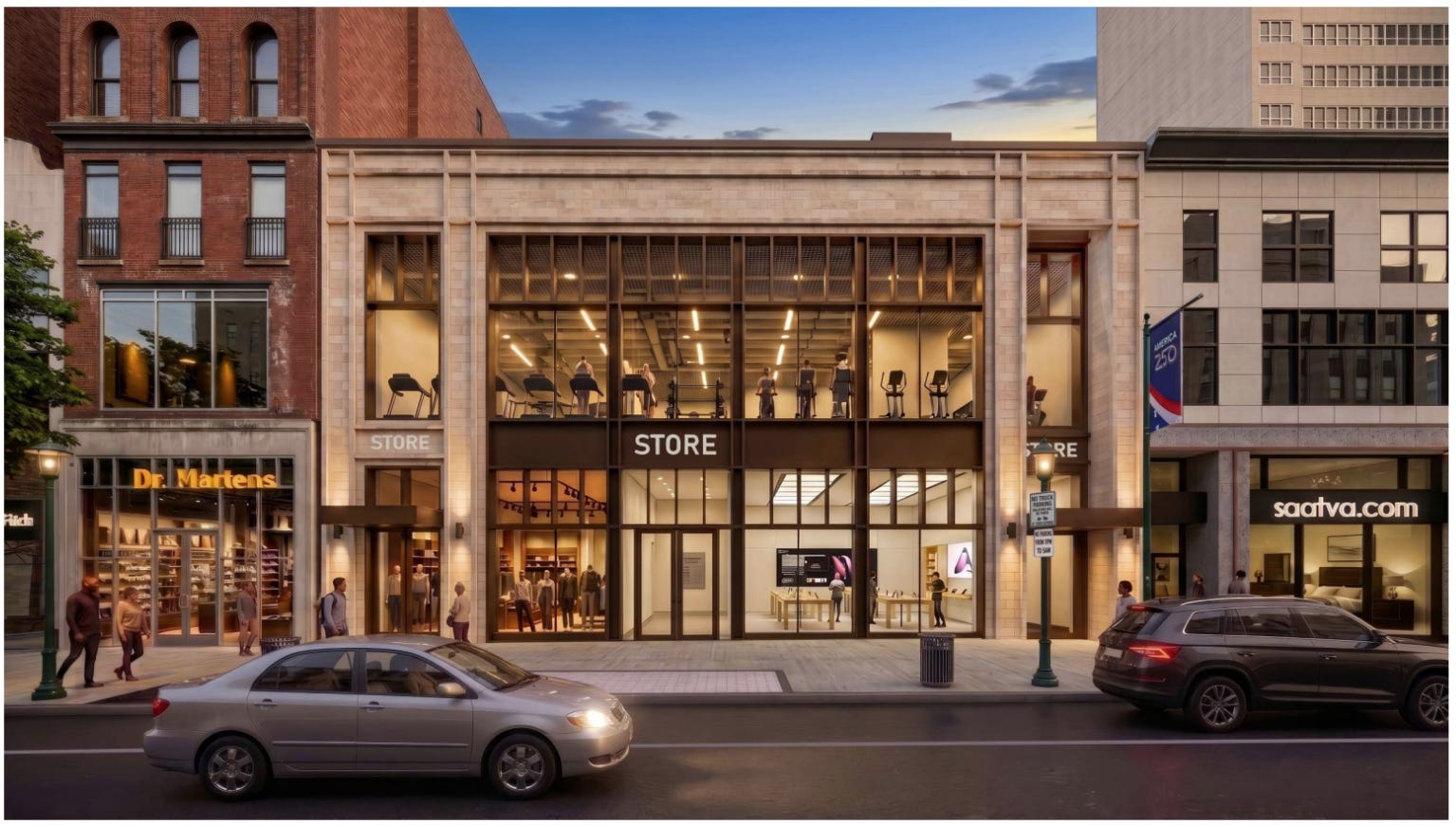
According to conditions placed on the demolition permit the previous owner was supposed to provide scans and detailed photographs of the property before demolition, and preserve whatever original materials possible. According to the current owner’s attorney, no salvaged materials were left, and a scan may have been made but was never provided to them.
Sixteen New Apartments in Tacony
The Commission unanimously approved, via the consent agenda, an application to add an elevator to the former Tacony Club building as part of a residential conversion. The Commission reviewed the project in concept in July. This approval clears the way for the creation of sixteen new homes, with commercial space on the first floor.
Accessible Entrances and a Cooling Upgrade at the College of Physicians
The Commission unanimously approved, via the consent agenda, an application for exterior alterations to historic buildings at 2129 Chestnut Street and 15-19 South 22nd Street owned by the College of Physicians. The work will create accessible entrances to both buildings from the shared courtyard, and add a screened evaporative cooling tower along S. Van Pelt Street, with room for a second in the future, which will allow the College to gradually remove the 17 condenser units along its Ludlow Street side yard.
Stucco Replacement in Rittenhouse
The Commission approved a revised application to rehabilitate the front façade of 1504 Pine Street, part of the Rittenhouse Fitler Historic District. The approved plan replaces the existing stucco on the first two floors, which was applied before the row was designated in 1971, repairs the deteriorating brownstone on the upper floors, and replaces the front windows.
The owners originally proposed stuccoing the entire façade, citing similar treatments elsewhere on the block. Those treatments also predate designation. The Architectural Committee recommended denial of that version in July, finding that covering the upper-floor brownstone would fail to preserve the building’s historic materials. Committee members suggested the compromise the owners ultimately adopted: new stucco below, and brownstone above restored by a skilled mason using composite patching or cast stone replacement units.