


In this issue:
New movement on trolley modernization on the T5 in Southwest Philly
$20.8 million to replace escalators running a decade past their service life
A $3 million contract for outreach to ‘vulnerable populations’ system-wide
Passenger revenue $12.6 million over budget, and 159 positions unfilled
T5 Trolley Modernization moves forward
At Thursday’s meeting, the Board authorized up to $2.6 million in purchase orders to PECO for engineering and construction tied to relocating roughly 100 utility poles and five primary circuits along the T5 line. The poles sit in the path of what SEPTA plans to build there: rebuilt, fully accessible on-street stations, new low-floor vehicles that carry more riders, and a physically separated bike lane running the length of the corridor. The project will rebuild the entire streetscape. A second, related resolution sends another $500,000 to PECO for power upgrades at the 40th Street Substation.
Together, the two items bring the T5 closer to construction on what is effectively the leading edge of Trolley Modernization. SEPTA is sequencing the program with the T lines first, followed by the Media–Sharon Hill D lines and the Route 15 G line. Among the T lines, the T5 has moved fastest, with design wrapping up this year and construction scheduled for 2027 through 2030. Some stations along Island Avenue are already going in as part of the City’s Island Avenue Improvement Project.
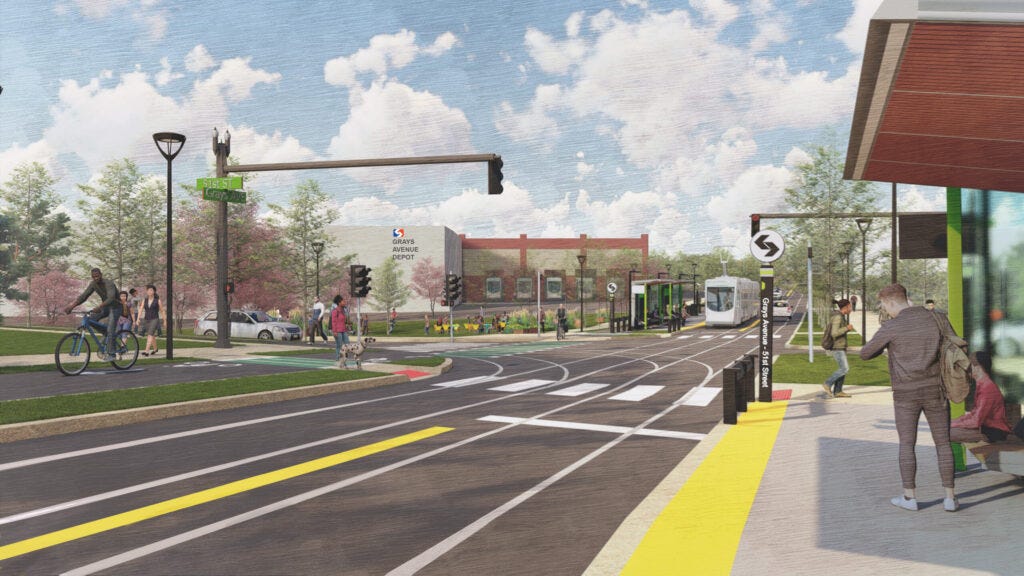
Image Credit: SEPTA
Much of Elmwood along this corridor is currently zoned RM-1, the Philly zoning code’s medium-density workhorse for small-lot multifamily housing. That’s a good base to build on, but ‘gentle density’ alone won’t generate the ridership the modernized trolley operation needs. Near the stations themselves, mid-rise zoning should be in the mix too.
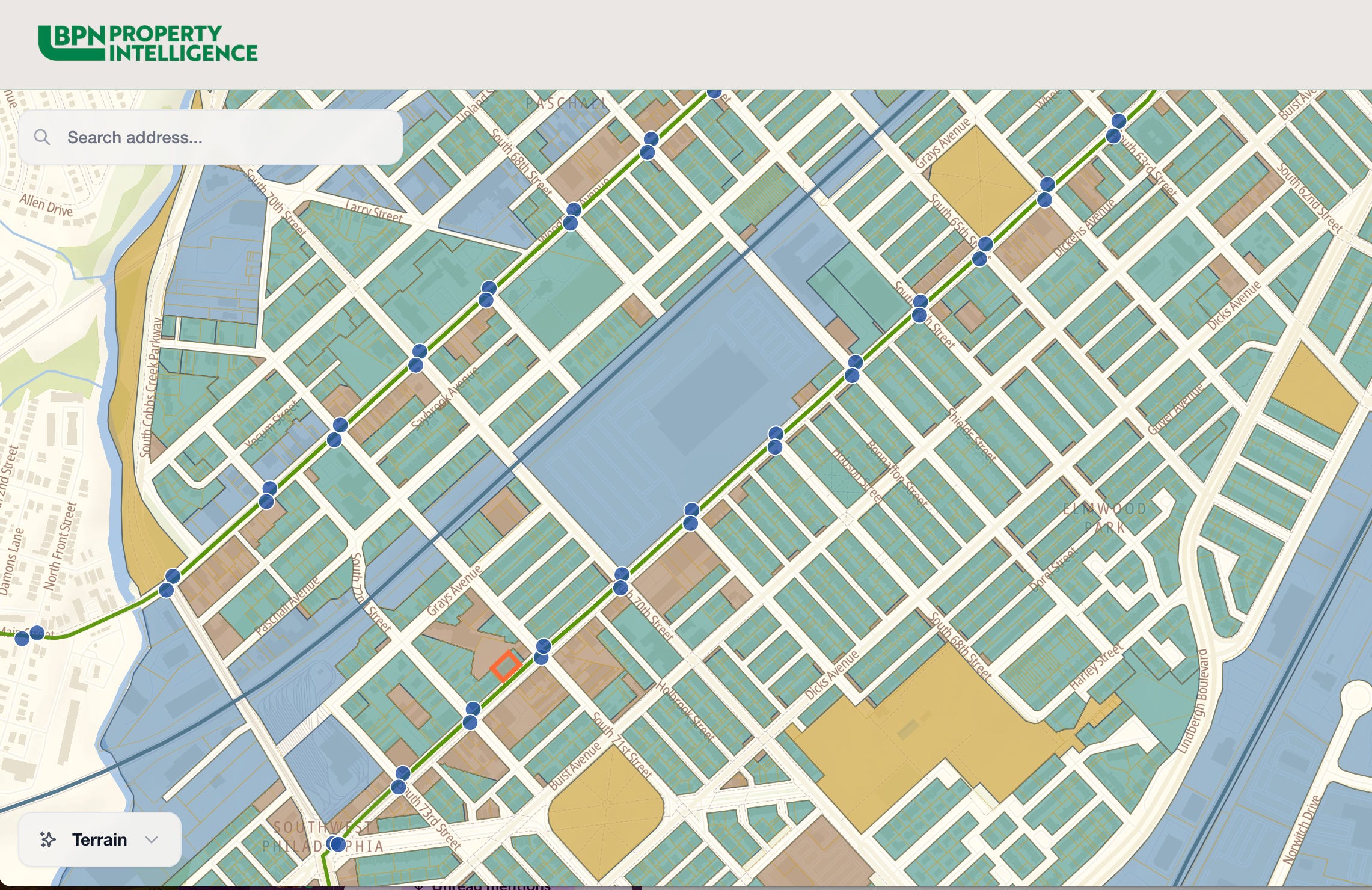
(Image: BPN Property Intelligence | Zoning along the T5: RM-1 in green; CMX-2 in light brown. See BPN’s zoning district glossary for details.)
Eastwick is flood-prone and disproportionately low-income; a rebuilt, accessible, bike-connected trolley spine there is the kind of infrastructure equity story advocates have spent years campaigning for. If this segment delivers anything close to what’s on paper, Trolley Modernization could be a shot in the arm to support more transit-accessible housing development in this part of the city.
Philadelphia’s new Transit-Oriented Communities law now provides a path to designate trolley stations for denser development, not just heavy rail stations. As SEPTA gets clearer on exactly where the modern trolley stations will go, Council President Kenyatta Johnson, whose 2nd District covers the corridor, should consider adding them to the TOC station roster to support ridership growth along this line.
Accessibility spending is up
The Board approved a $1.1 million change order for A.P. Construction’s work on the Tasker–Morris Station ADA Improvements project, pushing that contract past $9.9 million. Separately, the Board awarded a $3 million contract to Citizens Acting Together Can Help, Inc. to run outreach and engagement services for “vulnerable populations” system-wide under the Transit Police’s SCOPE program — SEPTA’s institutional answer to the homelessness and behavioral-health crises playing out across the system. A $20.8 million escalator overhaul covers units running five to 10 years past their expected service life.
